
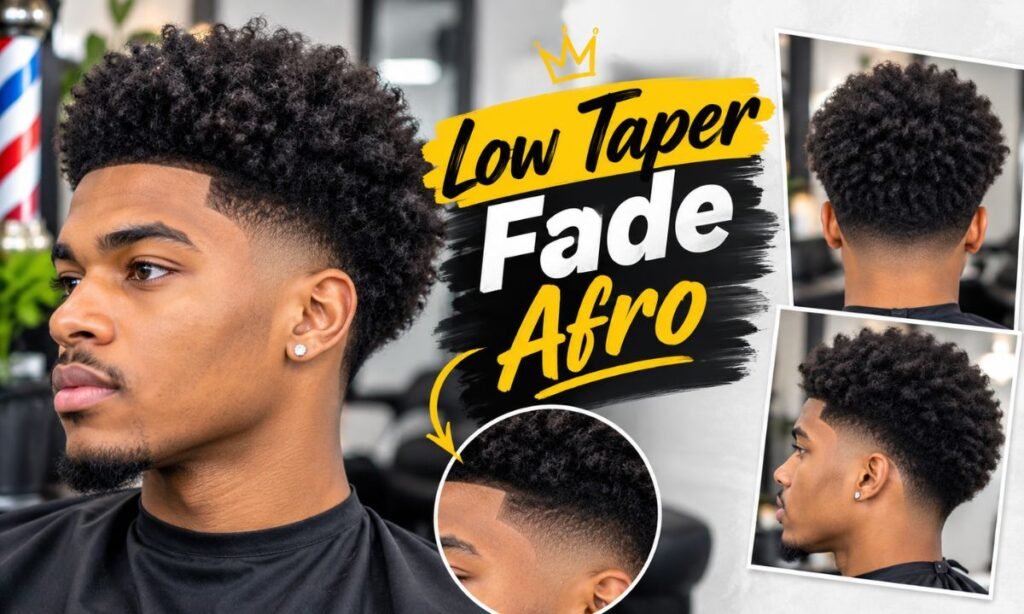
A low taper fade afro keeps your top full and your sides quietly trimmed. It’s sharp without being loud, low maintenance without looking lazy. If you want a cut that works in the boardroom and the barbershop chair alike, this is it. Below are 23 ways to wear it, plus everything you need to keep it fresh.
What Is a Low Taper Fade Afro?
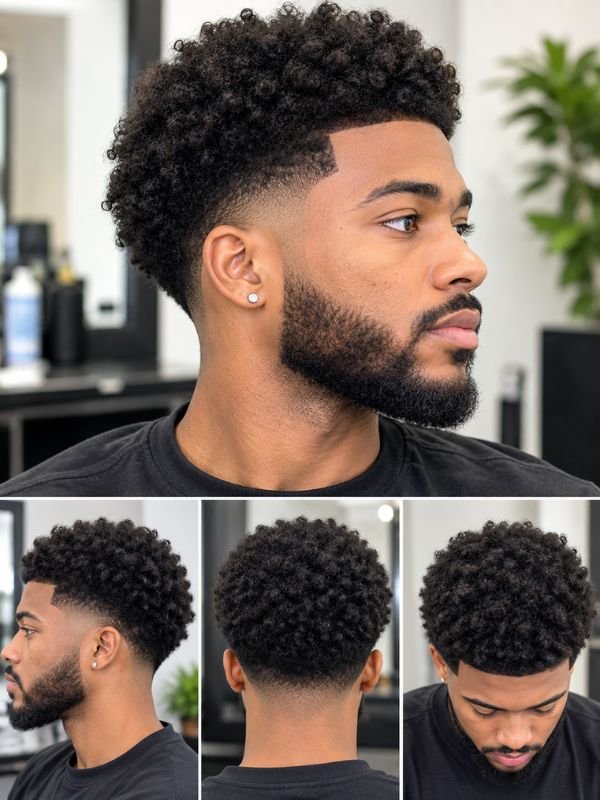
A low taper fade afro pairs a rounded, voluminous afro on top with a fade haircut that starts low, right around the ears and neckline. Unlike a mid or high fade, the blend stays close to the hairline instead of climbing up the sides of the head.
This makes it one of the most requested cuts for Black men afro hairstyles because it respects the natural shape of coily hair and kinky hair without shaving too much off. The afro stays the star of the show.
Barbers love it too. It’s forgiving on different head shapes, it grows out cleanly, and it gives you a built in reason to book barber appointments every few weeks instead of every few days.
There’s also a practical reason this cut has stuck around so long. A low fade doesn’t compete with facial hair, glasses, or hats the way a high fade sometimes does, since the blend sits well below where most accessories sit. That makes it one of the more versatile choices in any barbershop haircut menu, whether you’re headed to work, the gym, or a night out.
23 Low Taper Fade Afro Haircut Styles
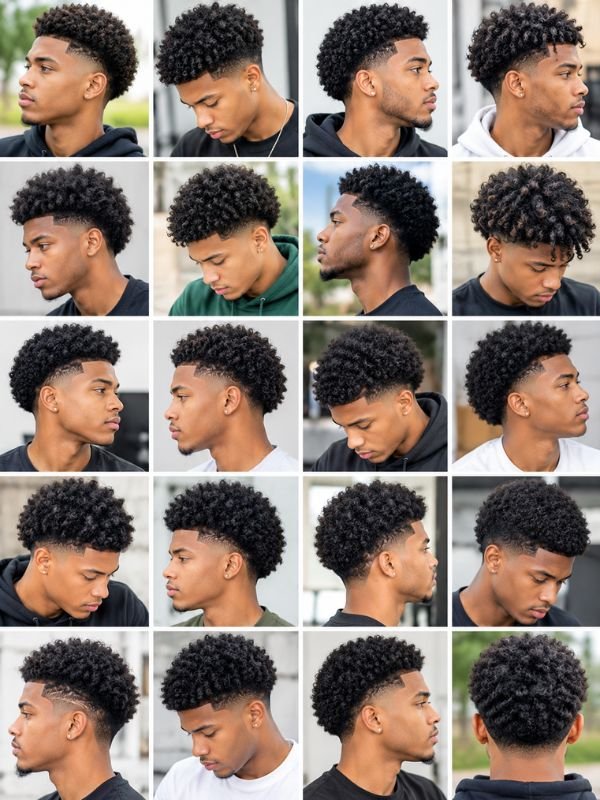
Every guy’s hair behaves differently, so no single style fits everyone. Here are 23 takes on the low taper fade afro haircut, from the classic version to bolder, design heavy spins on it.
1. Low Taper Fade Afro Haircut
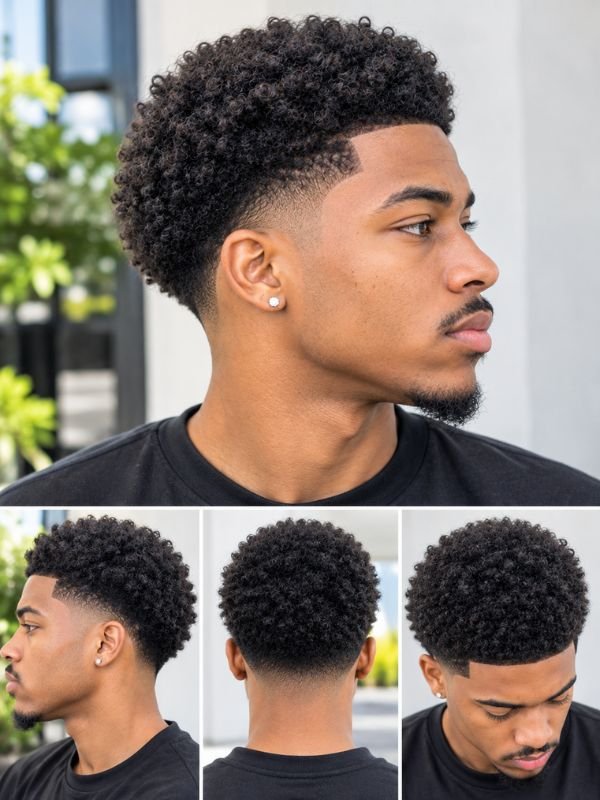
This is the original, the one every other version on this list borrows from. Full natural curls on top, a tight, low blend at the sides.
It works with straight parts, round faces, square jaws, pretty much anyone. Ask for a low fade and let the afro breathe on top.
2. Low Taper Fade Afro Short
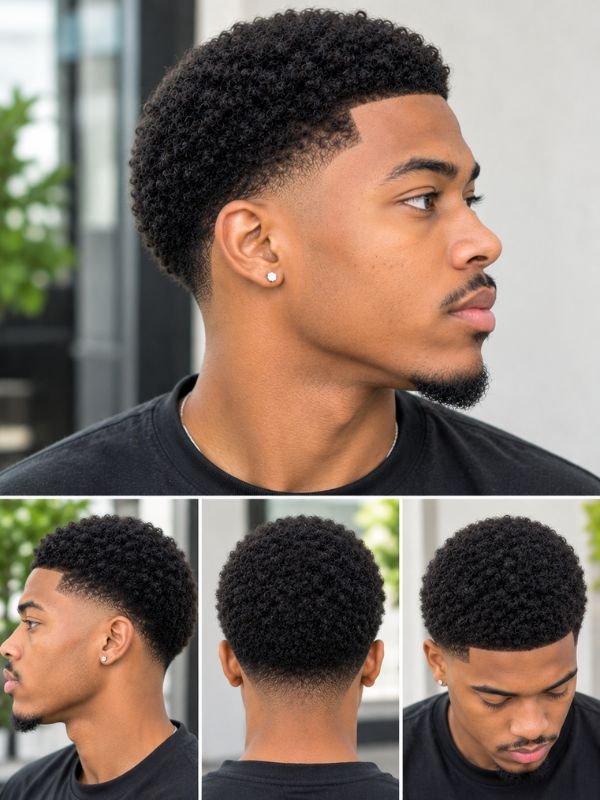
Here the top gets trimmed down to an inch or less, so the curl pattern stays visible but the volume shrinks. It’s a great pick if you’re new to natural afro hair and don’t want a big commitment yet.
Shorter length also means less daily styling. Comb it, add a light cream, and you’re done.
3. Low Taper Fade Afro Men
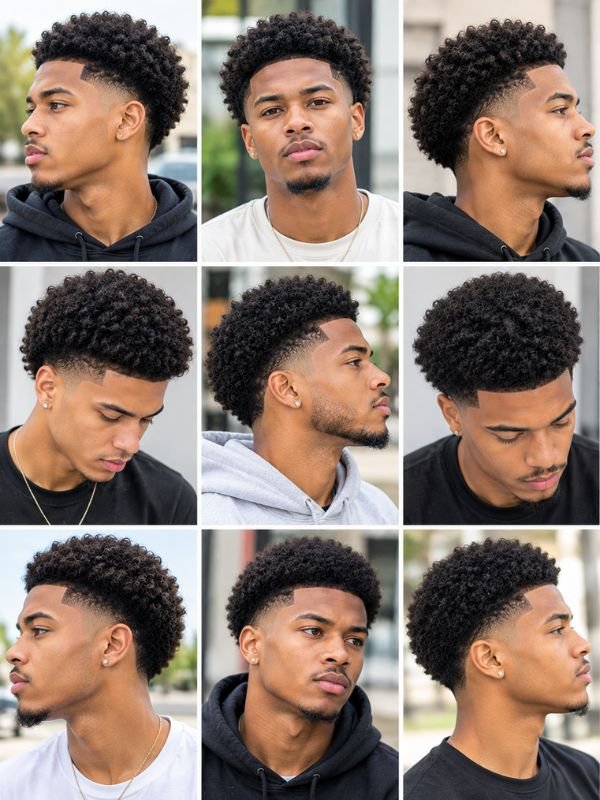
This is the everyday, no fuss version most men actually wear to work. Medium length afro, clean fade lines, nothing flashy.
It photographs well and travels well, meaning it still looks sharp after a long flight or a gym session. Low upkeep, high payoff.
4. Mid Taper Fade Afro
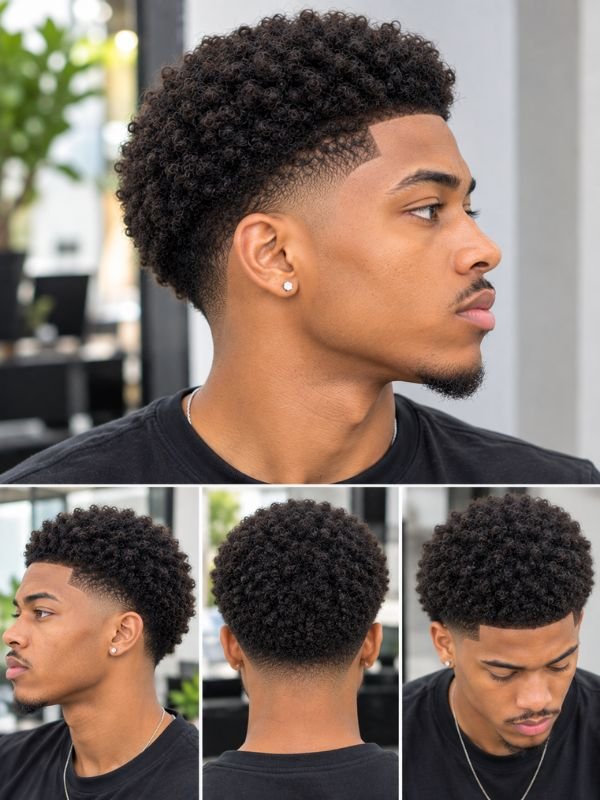
Technically a step up from a low fade, a mid taper fade afro moves the blend a bit higher on the sides. It creates more contrast between the fade and the afro on top.
Guys with thicker hair often prefer this because it removes a bit more bulk. Ask your barber to compare a low taper fade and a mid taper fade afro side by side before deciding, since the difference is subtle in photos but noticeable once it’s actually on your head.
5. Short Low Taper Fade Afro
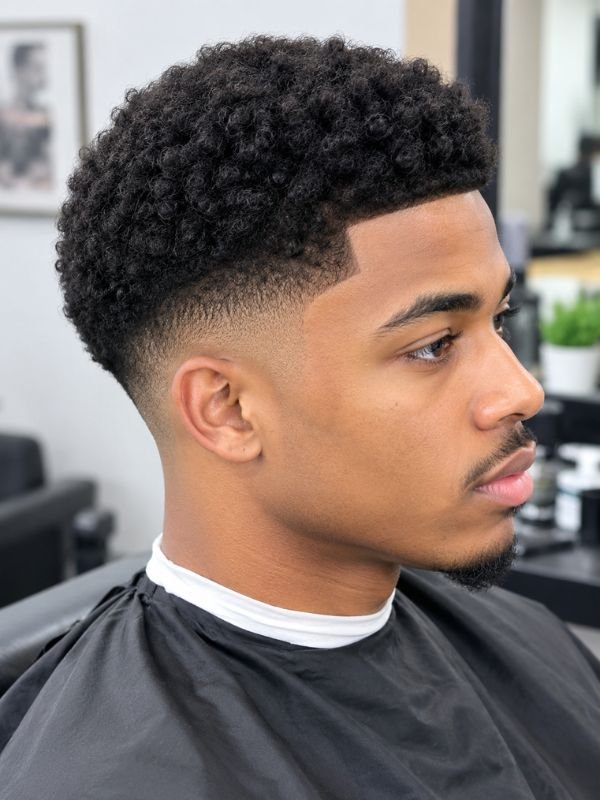
Not to be confused with option two, this version keeps the afro cropped very close all over, almost a fade into a mini afro rather than a full round shape. It suits guys who want texture without the height.
It’s also the lowest maintenance style on this list. A quick trim every three to four weeks keeps it crisp.
6. Low Taper Afro with Beard
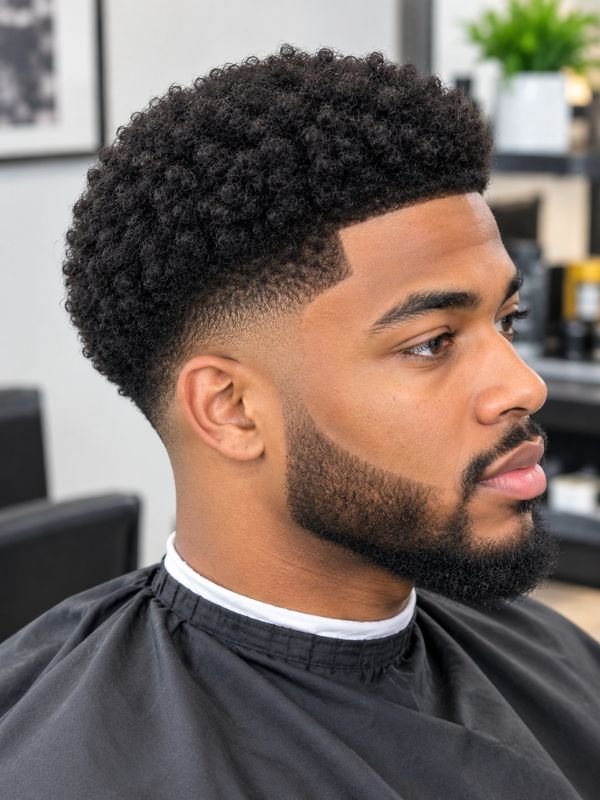
Pair the afro with a full or medium beard and get the fade to connect into a beard fade at the sideburns. The result reads mature, put together, intentional.
This combo is popular for a reason. It frames the face and gives the whole look a finished, tailored feel.
7. Taper Fade Afro with Line Up
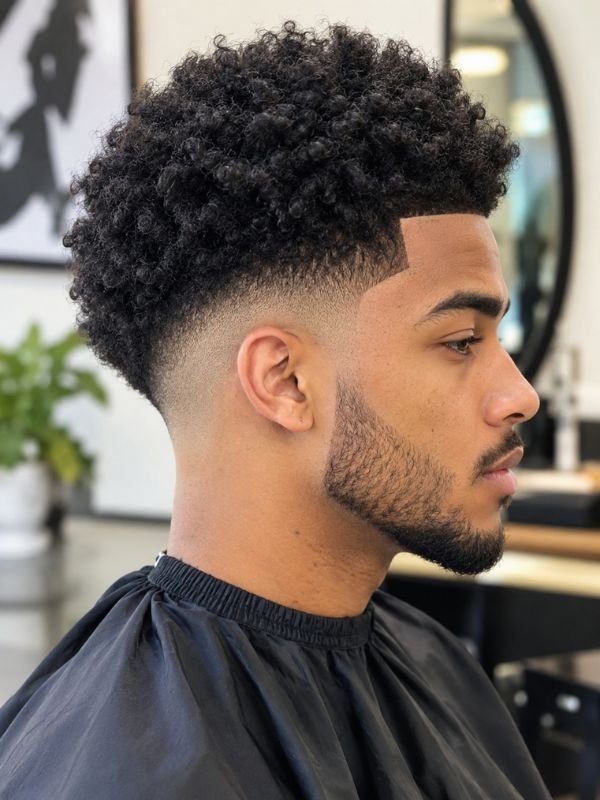
A line up is a crisp, razor sharp edge around the hairline, forehead, and temples. Add one to your taper fade afro and the contrast between soft curls and sharp lines becomes the whole appeal.
It needs upkeep though. Lines fade fast, so weekly touch ups keep it looking barbershop fresh.
8. Low Taper Curly Fade Afro
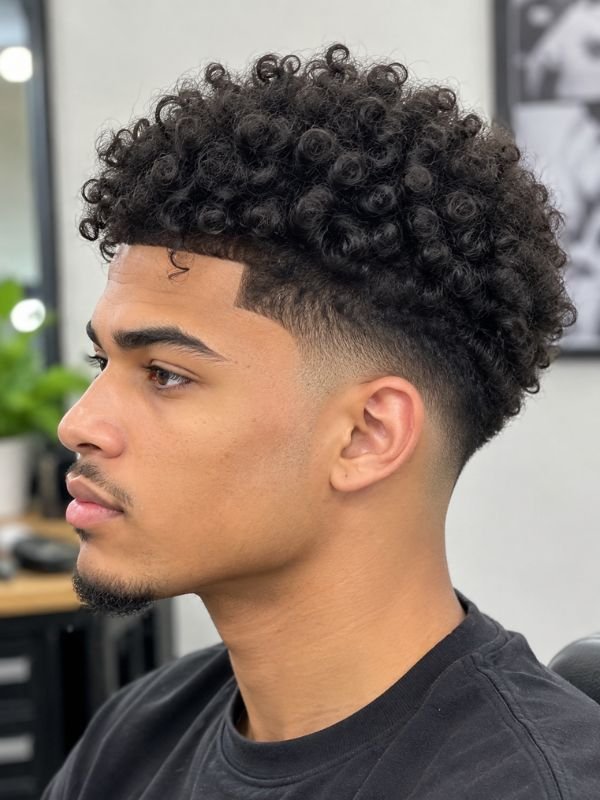
If your natural texture leans toward loose curls rather than tight coils, this variation lets those curls show individually instead of blending into one afro shape. Curl defining products make a real difference here.
A light curl cream applied to damp hair, then air dried, keeps the pattern looking natural instead of frizzy.
9. Low Taper Fade Modern Afro
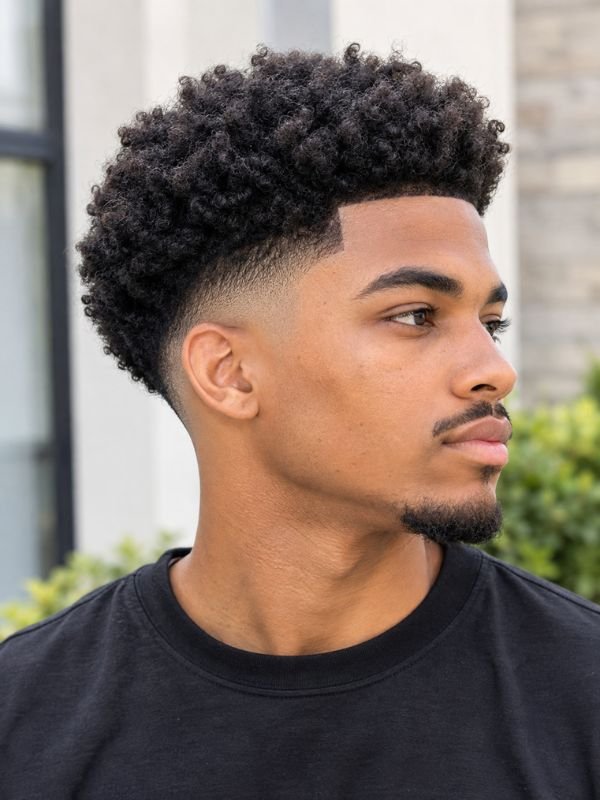
This is the 2026 update, slightly less rounded, slightly more textured on top, with a fade that’s blended almost seamlessly. It leans into a natural hair texture look rather than a shaped, sculpted one.
Modern barbers often use shears instead of clippers on top for this exact reason, to keep things soft and undone looking. It’s become one of the most requested versions of the cut heading into 2026, especially among guys who want something that still reads as current a year or two from now.
10. Taper Fade Afro with Design
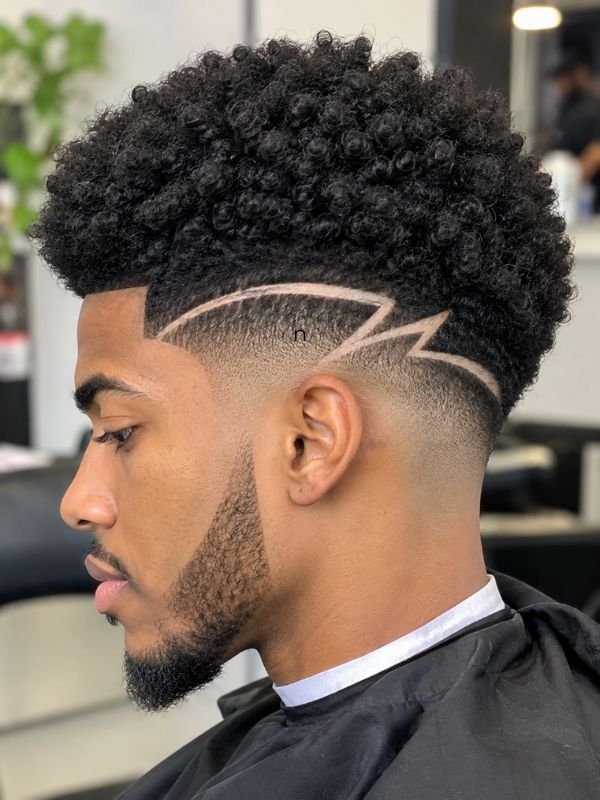
Shaved hair design lines, whether a single part, initials, or a geometric pattern, sit inside the fade area on the sides. It’s a bold, personal touch that turns a classic cut into something one of a kind.
Simple lines age better than intricate ones since they’re easier to maintain as hair grows back in.
11. Low Taper Fade Afro with Twist
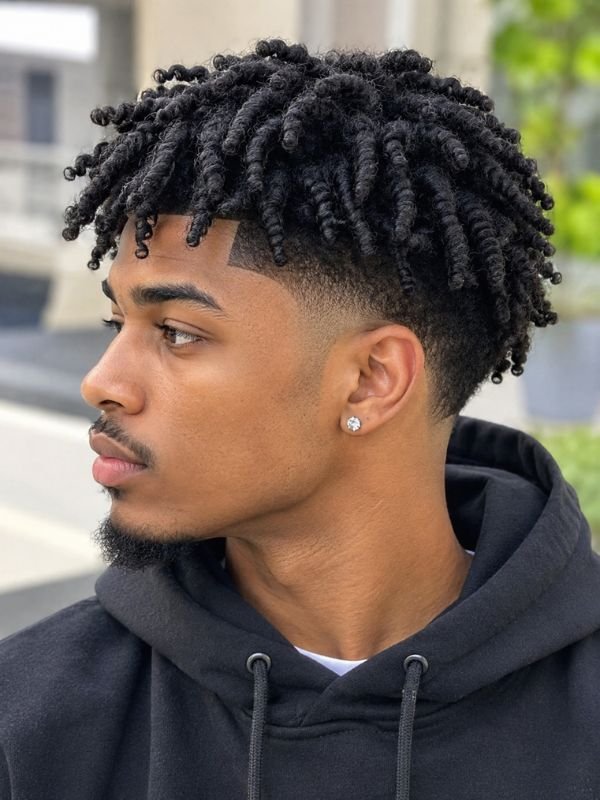
Two strand twists on top, paired with a low fade underneath, give texture and definition that a plain afro doesn’t have. It’s a favorite for guys who want more styling options day to day.
Twists also protect the hair, which matters if you’re trying to grow length without breakage.
12. Low Taper Fade Big Afro
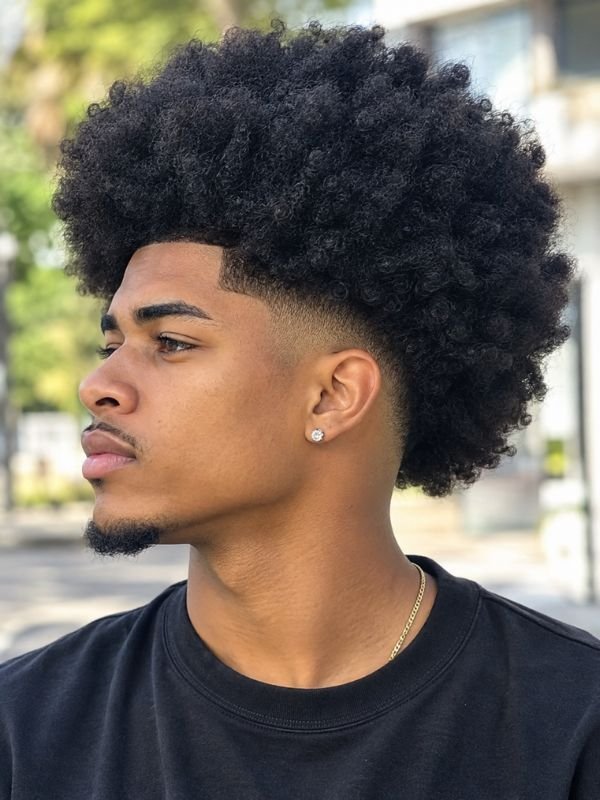
For guys chasing volume, this is the showstopper. Maximum height and width on top, still anchored by a low fade so it doesn’t look unkempt.
A wide tooth comb and a light hold cream are your best friends here. Overdoing product will weigh the afro down.
13. Low Taper Fade Clean Afro
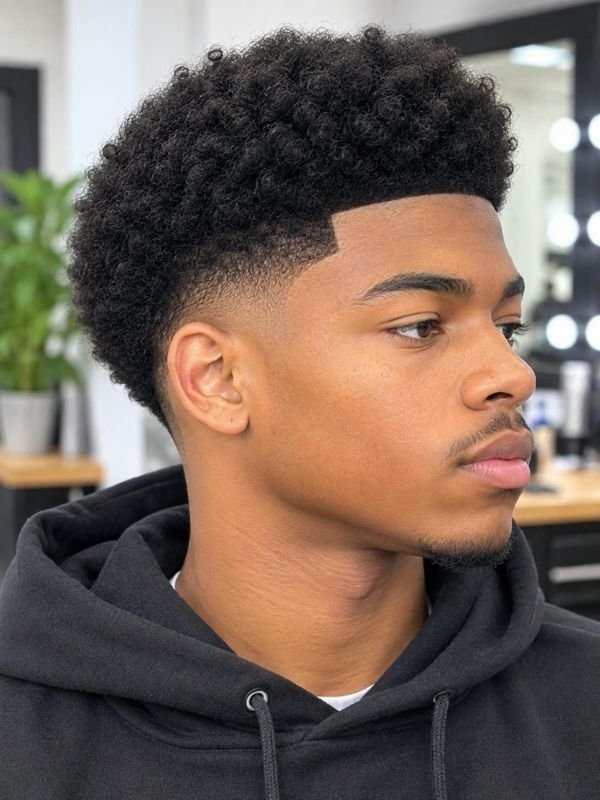
Sharp edges, crisp neckline, evenly rounded top. This is the version you’d want for an interview or a wedding, polished from every angle.
Regular barber appointments, roughly every two weeks, keep this look as sharp as day one.
14. Low Taper Afro for Black Men
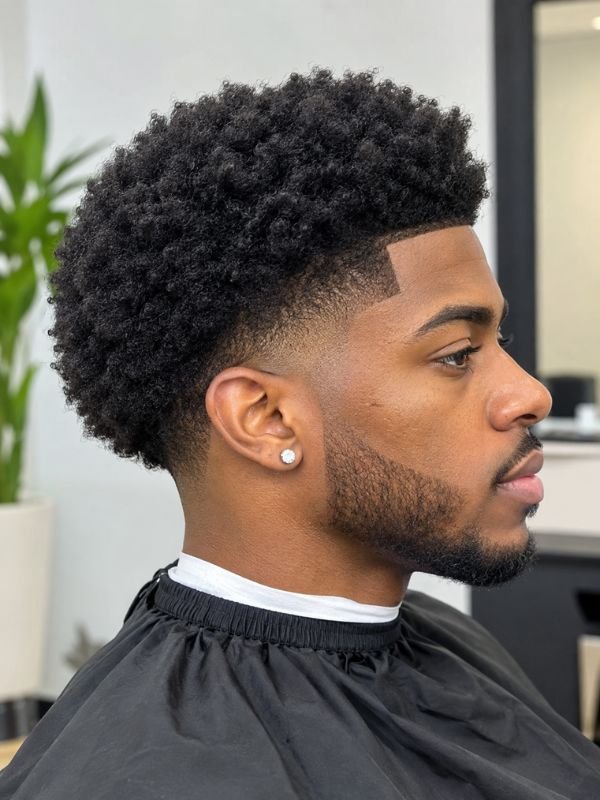
A catch all favorite that leans into natural afro textured hair without forcing it into an unnatural shape. Barbers work with what your hair already wants to do rather than against it.
It’s arguably the most flattering option for tight coils, since it doesn’t try to loosen or stretch the curl pattern.
15. Low Taper Fade Fresh Afro Style
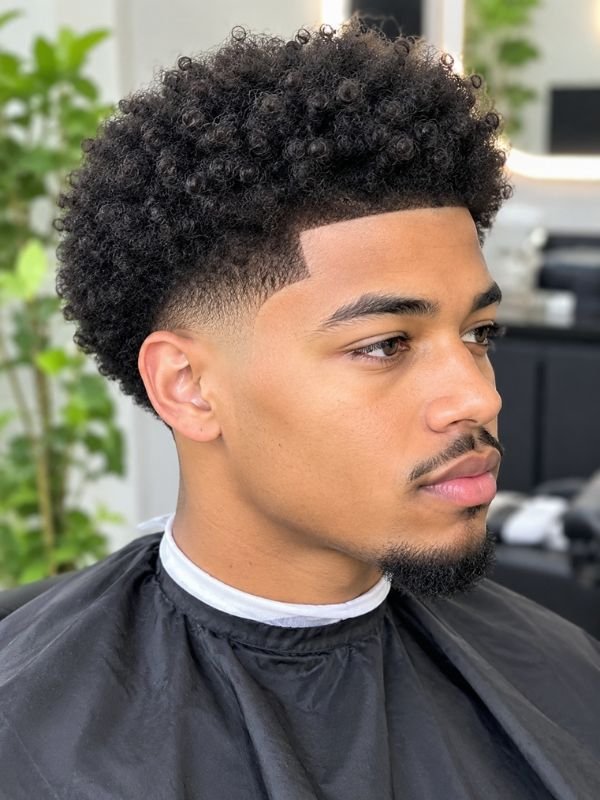
This is the just left the barbershop look, meaning crisp lines, an evenly shaped top, and zero flyaways. It’s less a specific cut and more a standard of finish.
Ask your barber for a haircut reference photo so you’re both picturing the same level of sharpness.
16. Taper Fade Afro with Waves
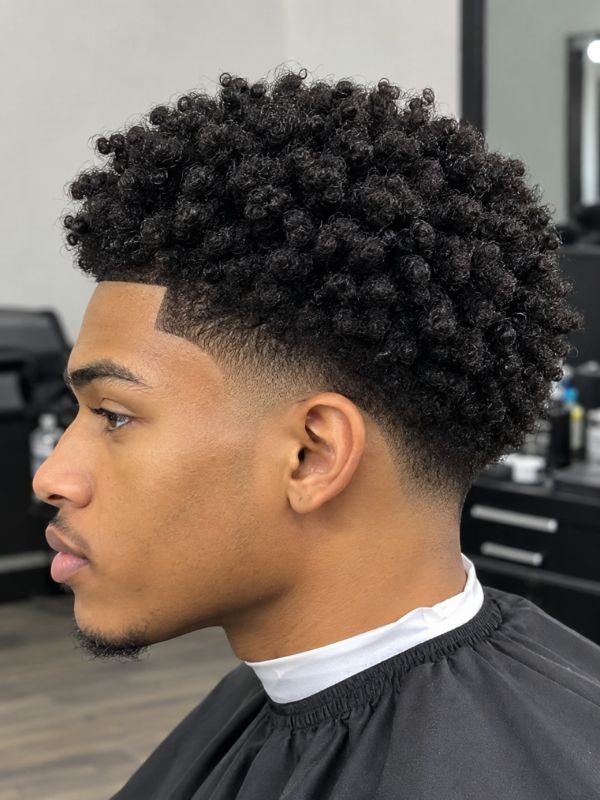
If your hair has a natural wave pattern underneath the curl, brushing it consistently can bring those waves out, especially on the sides near the fade. Some guys use a durag overnight to speed this along.
Paired with a low fade, the waves and the fade lines create a subtle, layered texture.
17. Low Taper Fade Classic Afro
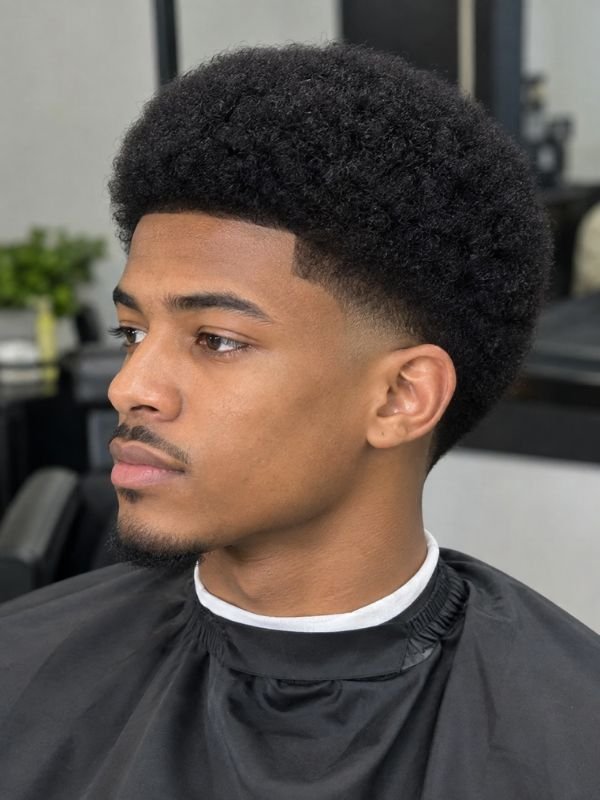
Think 1970s inspired, rounded, full, proud. The only modern update is the fade underneath, which keeps the sides from looking bulky.
This one has genuine staying power. It looked good decades ago and it still does now.
18. Taper Fade Afro with Sponge Curls
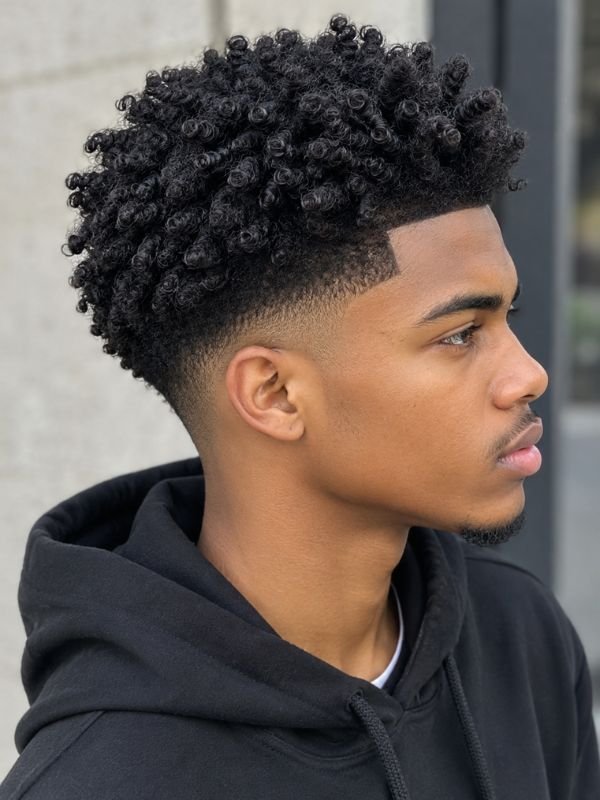
A curl sponge creates tight, uniform curls by twisting the hair as you brush it in circular motions. The result is a textured, almost 3D looking top that pairs beautifully with a low fade.
It takes a bit of practice, but a few minutes with a sponge curls tool a couple times a week keeps the pattern consistent.
19. Low Fade Afro with Part
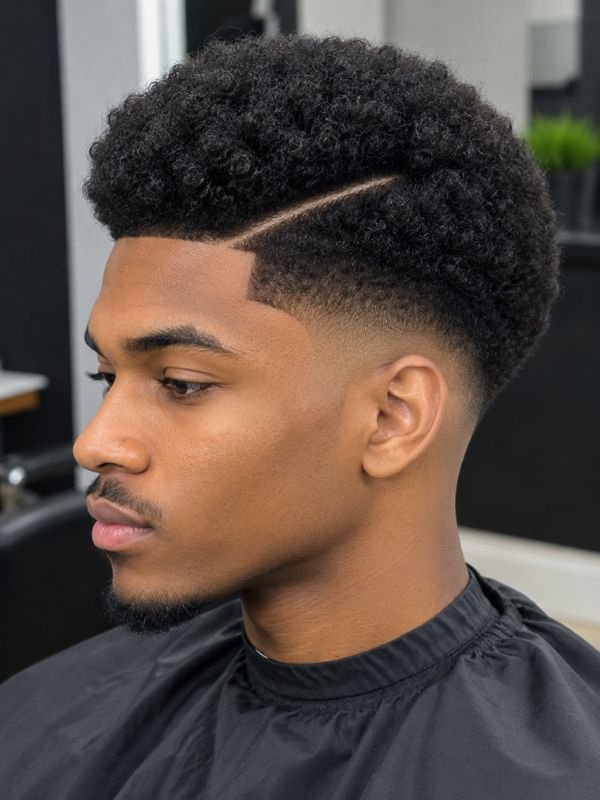
A shaved part, a thin line cut into the side of the head, adds a sharp geometric detail without a full design. It’s subtle enough for everyday wear but still stands out.
Ask for the part to sit just above the fade line so it doesn’t get lost as hair grows.
20. Low Taper Fade Afro for Everyday Style
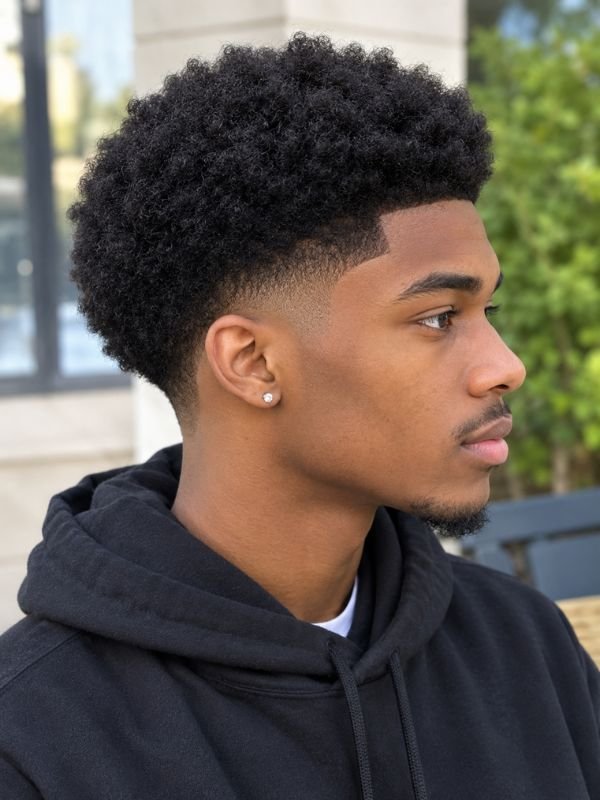
Built for practicality, this version prioritizes low upkeep over dramatic shaping. A slightly looser afro shape, a soft fade, nothing that needs constant attention.
It’s the cut most guys settle into once the novelty of flashier styles wears off, usually because it holds up through busy weeks without needing constant fixing between appointments.
21. Low Taper Fade Trendy Afro
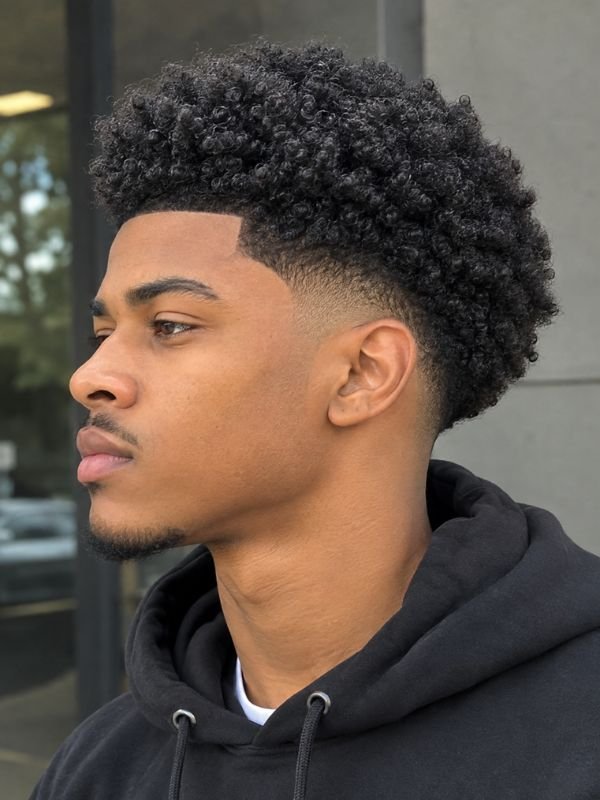
This year’s version tends to favor a slightly asymmetrical top, a touch more length on one side, paired with a razor clean low fade. It photographs well for social content, which is part of why it’s trending.
Ask your barber what’s currently popular in the shop. Trends shift fast, and a good barber tracks them closely.
22. Low Taper Fade Stylish Afro
A styling forward version that uses gel or edge control to sculpt the afro into a slightly more defined shape rather than letting it fall naturally. Great for guys who like a bit of daily ritual in their routine.
Ten minutes with the right product each morning is really all it takes.
23. Low Taper Fade Afro Mohawk
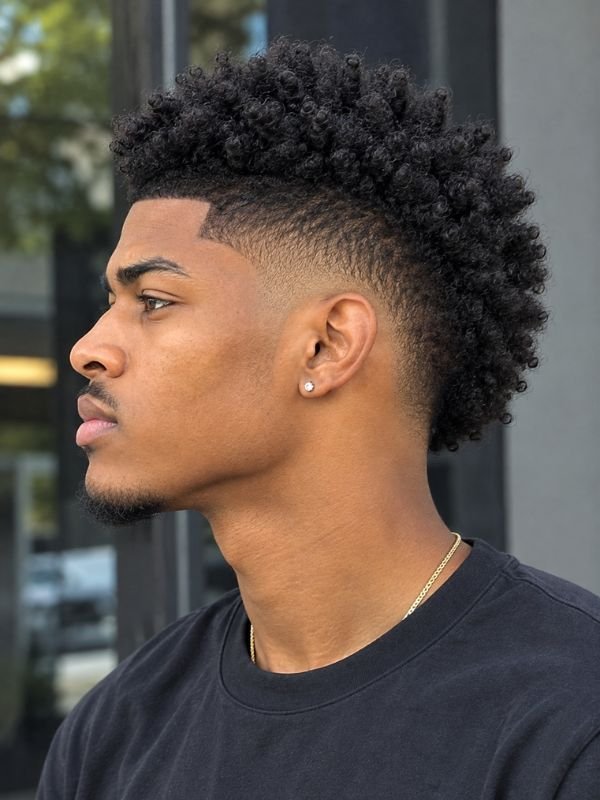
The boldest option on the list, sides faded low and close, top shaped into a raised strip running front to back. It takes confidence to pull off but it never blends into the background.
Because so much length sits in one narrow strip, expect more frequent trims to keep the shape sharp.
Low Taper Fade vs. Mid and High Fade Afro
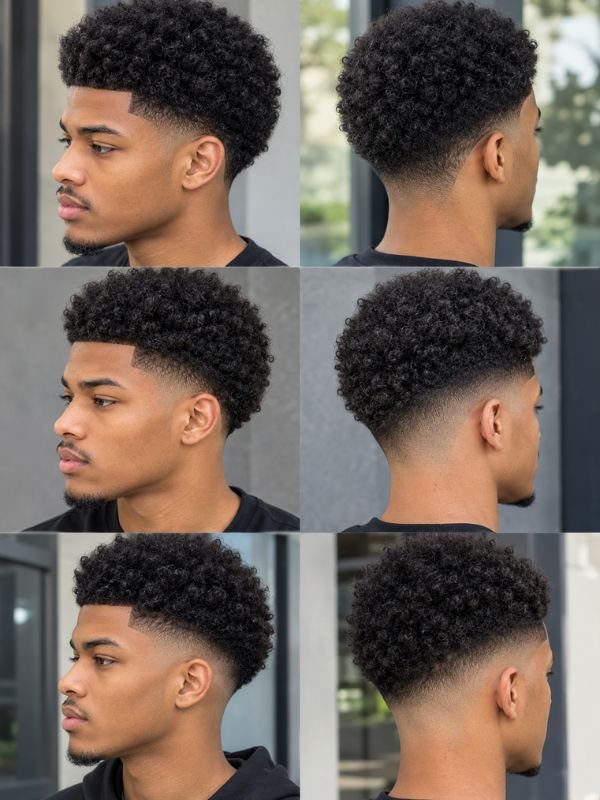
The difference comes down to where the blend starts on your head. A low taper fade afro starts right at the hairline, keeping most of the sides looking naturally full for longer.
A mid taper fade afro starts higher, around ear level, creating more visible contrast. A high taper fade afro starts higher still, near the temple, and gives the most dramatic, sculpted look.
None of these are objectively better. It really depends on how much contrast you want and how often you’re willing to sit in the barber’s chair. Low fades grow out the most gracefully, which makes them a smart pick if you go longer between visits.
Workplace and lifestyle matter too. A low fade reads as understated and professional, which is part of why it’s such a common request for guys in corporate settings. A high taper fade afro, by contrast, leans bolder and works well for anyone who wants their haircut to make more of a statement.
How to Maintain a Low Taper Fade Afro
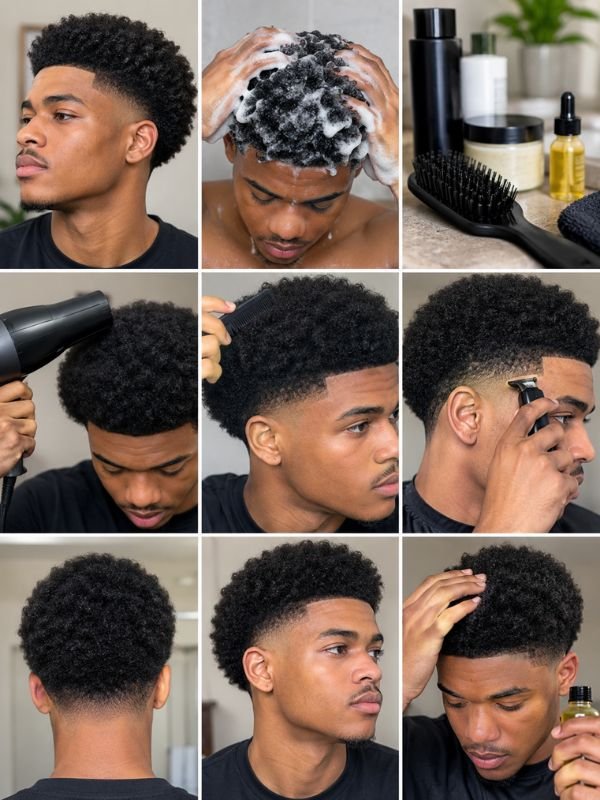
Maintenance is where this cut really earns its reputation as low effort. A light leave in conditioner keeps natural afro hair from drying out between washes.
Trim the fade every two to three weeks. Waiting longer lets the blend grow out and lose its crisp line, which defeats the point of getting a fade in the first place.
On the top, a wide tooth comb prevents breakage that regular brushes cause on tight coils. Sleep with a satin bonnet or pillowcase too, since cotton pulls moisture out of the hair overnight.
How to Ask Your Barber for a Low Taper Fade Afro
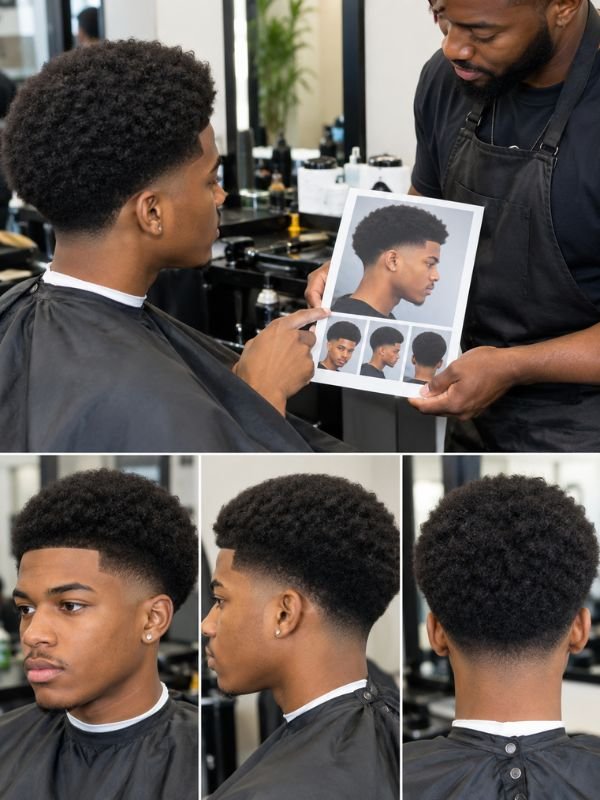
Walking in with the right words saves everyone time. Say you want a low fade that starts near the ears, not higher up the head, and specify you want the top left natural or only lightly shaped.
Bring a haircut reference photo, even a rough one. Barbers work from images far more precisely than from verbal descriptions alone.
Mention your hair type too, whether it’s tight coils or loose curls, since that changes how the barber approaches shaping the top. A good barbershop haircut starts with a good conversation before the clippers even come out.
Don’t be afraid to speak up mid cut either. If the fade feels higher than you pictured, say so before the barber moves on to the next step. Most barbers would rather pause and adjust than finish a cut you’re not happy with.
Why the Low Taper Fade Afro Is Popular
Part of it is simple practicality. The cut grows out cleanly, flatters most face shapes, and doesn’t demand a strict styling routine every single morning.
The other part is cultural. This style celebrates natural curls and natural hair texture rather than trying to force hair into a shape it doesn’t naturally hold, which resonates with a lot of men who spent years fighting their curl pattern instead of working with it.
Add in how well it photographs for social platforms, and it’s easy to see why barbershops keep this request on repeat.
There’s a community angle too. Black men haircuts have always doubled as a form of self expression, and barbershops themselves have long served as gathering spots for conversation, advice, and connection. A cut that celebrates natural curls rather than masking them fits naturally into that tradition, which is part of why so many guys stick with some version of it for years, not just one season.
Choosing the Right Style for Your Face Shape
Not every version on this list suits every face, and that’s worth thinking about before you sit in the chair. A round face usually looks sharper with more height on top, since extra volume adds length the face doesn’t naturally have.
Square jaws pair well with softer, rounder afro shapes, since the curl balances out strong angles instead of competing with them. Options like the classic afro or the everyday style tend to work best here.
Longer faces benefit from width over height. A low taper fade big afro or a curl sponge look adds side volume without stretching the face further. If you’re unsure, ask your barber directly. They see hundreds of face shapes a month and can steer you toward what actually suits you, not just what’s trending.
Best Products to Keep Your Afro Looking Sharp
A light, water based curl cream keeps definition without the greasy look heavier pomades leave behind. Look for one built specifically for coily hair or kinky hair rather than a generic styling gel.
A boar bristle brush distributes natural oils evenly across the scalp, which helps with shine and reduces dryness over time. It’s a small habit that makes a noticeable difference within a couple of weeks.
For the fade itself, a bit of clipper oil at home between barber appointments keeps the blend looking sharp instead of growing out patchy.
Don’t skip a good shampoo either. Products loaded with sulfates strip natural oils faster than they should, leaving kinky hair dry and prone to breakage. A sulfate free wash once or twice a week, followed by a deep conditioner, keeps the whole style looking healthy rather than just neat.
A silk or satin durag also earns its place in the routine, especially overnight. It cuts down on frizz, protects the fade lines from friction against a pillow, and helps waves or curl patterns hold their shape until morning.
Frequently Asked Questions
How often should I get a low taper fade afro trimmed?
Every two to three weeks keeps the fade lines crisp. The top can go longer between shaping sessions since it’s meant to stay fuller.
Does a low taper fade afro work with thick or fine hair?
Yes to both. Thick hair holds the afro shape with ease, while fine hair benefits from a slightly shorter top so it doesn’t fall flat.
Can I do a low taper fade afro at home?
The top is manageable solo with clippers and a guard, but the fade blend is tricky to get even without a mirror setup and practice. Most guys leave the fade itself to a barber.
What’s the difference between a low taper fade and a regular low fade?
A taper narrows gradually with no hard line, blending softly into the skin or a short guard length. A regular low fade can include a sharper transition. Ask your barber which one matches the reference photo you bring in.
Will a low taper fade afro suit fine or thinning hair?
Yes, and it can actually help. Keeping the sides short draws attention upward, while a slightly shorter afro on top avoids looking sparse the way longer, looser styles sometimes do on thinning hair.
Final Thoughts
The low taper fade afro earns its popularity honestly. It’s easy to maintain, it flatters nearly every face shape, and it lets your natural texture do the talking instead of fighting it. Pick the version from this list that matches your hair type and your routine, bring a photo to your next appointment, and let your barber take it from there.
